Showing posts with label Japan. Show all posts

Wednesday, August 12, 2009

How To's #20: Get a Prepaid Cellphone

Please visit my new site: www.TokyoSurvival.com


They finally have a relatively tourist and short stay friendly system for prepaid phones. It is darn reasonable too! Before getting a cell was a crazy ordeal; You had to sign a contract and pay crazy rates for only 30 minutes a month!

Visiting friends for a short period of time is a pain without the coordination convenience of a phone. The only prepaid phones that were available were the ones for rent at the airport. THEY WERE AND STILL ARE TERRIBLE! The Rates are horrible and the phone is incredibly old. Worst is the LACK OF E-MAIL! If you have friends in Japan, this is a necessity.

Introducing the new softbank prepaid phone. It's only 4000yen for the cellphone and prepaid phone cards. The rates are still pretty bad at 9 yen per 6 seconds. However, they don't over charge you for short conversations, which I greatly appreciate. These prepaid cards can be purchased at local convenient stores if you run out of minutes.

Now the best part:
Unlimited e-mails for 300yen a month! isn't that insane!?!
My old cellphone charged be 1000yen for every 10,000 e-mails... which seem like a lot... but you can blast thought it pretty quickly if you are using it like instant messaging.

Notes and the Catch:
  • The phone only lasts for a year.
  • You can only have e-mail only and emergency calls only up to 90 days. Otherwise you need to add more money to your prepaid minutes.
  • Choosing you own e-mail is possible, but difficult to figure it out. I had to use a crazy looking one.

  • You need to get a Japanese person to handle the contract for you or have an alien registration card (my friend was able to do it without it... but that is a pretty big inconsistency... so assume that you need a Japanese person).

  • Go to Flagship Softbank Stores!!! The one in Shibuya is the one I went to. Locations that sell softbank phones like yodabashi and akiba do NOT have prepaid cells. The large one in Harajuku might have it, but I have not confirmed.
  • PUSH PUSH PUSH! I hiked all over the city trying to get this damn phone. I called to make sure they had it, only for them to tell me that they didn't. When I insisted that someone confirmed that they did have it, than they were able to sell me the phone (not before disappearing for 15 minutes to check with their manager of course). It was frustrating needless to say.

Finding a Softbank Store:

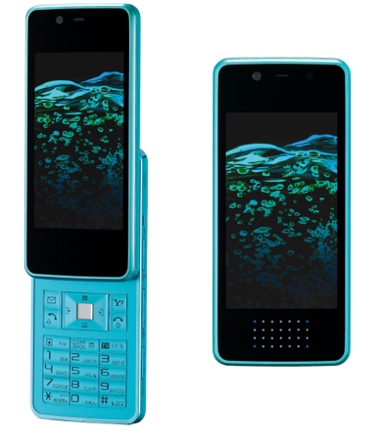
So getting the phone was still a little painful and infuriating, but in the end I was infinitely satisfied with my phone. After everything, it cost me a little over 8000 yen to get me set up. Of course, I am not counting the cost of training around the damn city >_<! I got the 730SC - I was satisfied with the screen, functionality, and buttons (if they are to flat its hard to type). However, I never figured out how to get infrared to work.

If you are indeed staying a longer time in Japan: Please check out my older posts on my overview of cellphone carriers How To's#3: Getting a Cellphone(j-phone)


Monday, June 15, 2009

How to#18: Find something cheap to do in Tokyo’s greatest spot!

Sorry for the delay my friends... been caught up graduating and getting a job. As well as making the long transition to Tokyosurvival.com...wordpress is proving to be far more difficult to me than I had initially anticipated.

Anyways here is the long awaited post:


http://www.tokyosurvival.com/how-to18-find-something-cheap-to-do-in-tokyos-greatest-spot/

Please read the full post at the link above. I have step by step photographic instructions.


EXCERPT:

"Yes…I do indeed speak of hookah or the water tobacco. Guess what… it is dirt cheap and good. You get your own hookah for 400 yen and you are expected to buy a drink from around 200 yen. All in all, it’s a really cheap way to spend a couple hours. I used to go here about once a week. They also offer free mixes. My personal favorite flavors are: Honey and Rose/Vanilla mix. This place is literally a hole in the wall and super tiny. Still a great place with great people though.

(Warning: whoever said hookah is better for you than cigarettes was lying. I am telling you up front that it is like smoking 100 cigarettes. You have been warned…Also, water tobacco isn’t legal in Japan…but they get away with calling themselves something herbal. Just an FYI.. You aren’t going to get deported or anything, so no worries)

It is located in a place very close to my heart… Shimokitazawa(下北沢)

Shimokitazawa is a great spot for cheap dining and shopping and very much has a culture of it’s own. It reminded me of Haight Ashbury in San Francisco. In fact, there is a store called Haight Ashbury! This is not covered in a lot of tourist books so it’s tourist free. Only people who have stayed in Tokyo for a while know of this place. It’s also a great place to meet other cool international people."

Tuesday, April 21, 2009

Culture Note #5: What is Karoshi?


Karōshi 過労死 is Death by Overwork

Only in Japan does such a thing exist or is even an issue. Japan has been known for it's hustle and bustle lifestyle but not without a cost. All those who live in Japan know that when it turns night, every izakaya is filled with drunken salarymen. However, for every one of those there is one somewhere else working excessive overtime.

Karoshi is usually a stroke or heart attack. However, suicide that was caused by stress is also considered Karoshi. This is a recognized death by insurance companies. If a family member dies of Karoshi the company that they worked for will pay out the family...not well mind you.

This is a serious problem in Japan and they have attempted to rectify it, but after understanding the dynamics of the culture, I can say that it won't change anytime soon. The expectation from workers is intense.

I know people who sleep a a couple hours a night to than wake up and go to work. The offices pay for dinner and taxi cab fare. I also know people who's companies have paid for hotels nearby the office so that they do not need to leave for too long.

I will leave the topic of crazy suicide rates in Japan for another day. Now please enjoy this un-PC game based on Karoshi

ENJOY!

http://armorgames.com/play/2407/karoshi-suicide-salaryman

Wednesday, February 18, 2009

Culture Note #2: What is KY and why is it important?


空気読めない
Kuuki Yomenai = K.Y.(Adj,,n.)

When I first heard it I thought of something dirty. Don't lie, you know you did too!

It literally means "cannot read the air"

While you are living in Japan you will find this is a commonly used phrase. It is NOT ONLY used by young people. It is referring to a person who is oblivious to his current surrounding, and may say or do something insensitive or inappropriate.

This has a negative connotation of ignorance.
Synonymous words would be : Dense or Thick-headed.
Another variation is C.K.Y.
C is for Chou = super, really, extremely

Tuesday, February 17, 2009

Culture note #1: What is Aizuchi and why does everyone look like a bogglehead?


Aizuchi (相槌 or あいづち)

It is the act of nodding your head an uttering something to reassure the speaker that you are listening. This is VITAL to communicating in Japan.


The noise that is often used is:

  • "un"
  • "ee"(pronounced "eh")
  • "hai"
  • "soune"
  • "sou desuka"
  • "sou desune"
  • more variations of "sou"(haha)
  • variations of "hontou"
To be safe, just stick with the top 3.

When: when any Japanese person is talking, regardless of status.

How: constantly nod your head(like a boggle head), and say "un" every 4-6 nods.

Why: To be polite, and further integrated in the culture that is Japan.


I actually participated in a study on how Gaijin learn or pick up Aizuchi. They recorded me speaking Japanese and English. If you live their long enough and you converse enough in Japanese you WILL pick it up. It's only when you go back to your country that people ask you why you keep constantly nodding and interrupting them, that you realize that you subconsciously picked it up.

Thursday, February 12, 2009

How to: #15: eat out in Japan (must know words!)


This is a list of things/words you need to know:

Kinen-Seki and Kitsuen-Seki:

These will be the first thing your hear when you enter a restaurant. It means non-smoking and smoking. In Japan, smoking is still allowed in doors. This was a bit of a culture shock to me, since I grew up in San Francisco. We haven't had smoking sections since I was a child.

If you wand non-smoking you say "kinen-seki onegaishimasu".

Note: their little dividers will do little to block the smoke from wafting into your nostrils. Also, if you have sensitive eyes like I do...invest in some eyedrops...o_o

Oshibori(おしぼり or お絞り):

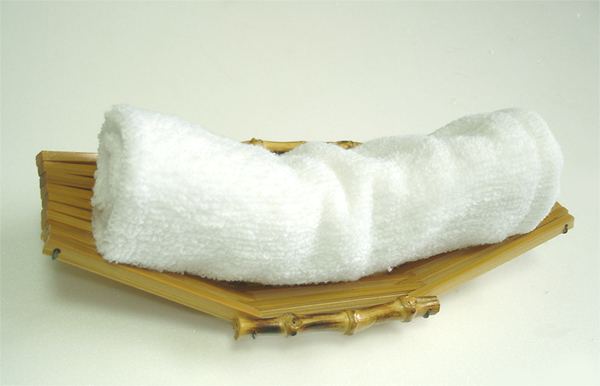
Wherever, you eat you will have a wet towelette to clean your hands. You will have this regardless of whether or not you will be eating with your hands.

Note: hot in the winter, cold in the summer

WARNING: DO NOT WIPE YOUR FACE WITH THIS (I've seen some salarymen do it. but it's a no-no)

Osusume(おすすめ or お勧め):

It means recommendation. Most places will have a recommendation written on the menu. So learn the kanji well...because you will be seeing it. Also, sometimes you won't be able to read the menu. It is very useful to ask your waitor/waitress what is their recommendation.

"Osusume ha.." is acceptable... or
"Anata no osusume ha nan desuka" if you are determined to speak in whole sentences.

Teishoku:

LEARN THIS KANJI, IT WILL BE YOUR SAVIOR!

I love love...LOVE Teishoku! It is set meals! Considering that I was hungry for the first 4 months in Japan, I looked forward to these reasonably prices filling meals. Lunch time is of course cheaper, and it always comes with delicious miso(even at Denny's)

I find that the family owned hole-in-the-wall spots can be pretty darn delicious...so start looking! And share you favorite spots with your friends.

Omochikaeri:

It means "to go". If you go to fast food restaurants they will ask you for here or to go.
Note: There are no such things as doggie bags in Japan. People will just look at you funny.

Betsu-Betsu:

Whenever you eat at a restaurant you will almost always pay at the door. Before you pay, just say the magic words "betsu betsu" and they will very easily SPLIT THE CHECK. Each person will pay only for their own meal, and since gratuity is included it just makes it easier.

Note: I'm more impressed because I am American...Because if you ask an American waitor/waitress to split the check, they look at you as if you asked them to do advanced quantum physics.

"Gochisou sama deshita" (ごちそうさまでした):

"Thank you for a wonderful meal"

This is very useful for relationship building...and it's pretty standard for politeness.

Whether you live in a dorm or go to you favorite sushi place. You should say that as your are leaving. Say it loud and proudly, to further emphasize how delicious the meal was! It will make them happy, and make you happy for feeling like you are a part of the culture.

I had Kaiten-sushi(revolving sushi) way to often... so I used it regularly. The preparers will remember you, and it will help your cultural immersion in Japan!

Gan Batte!

Friday, January 9, 2009

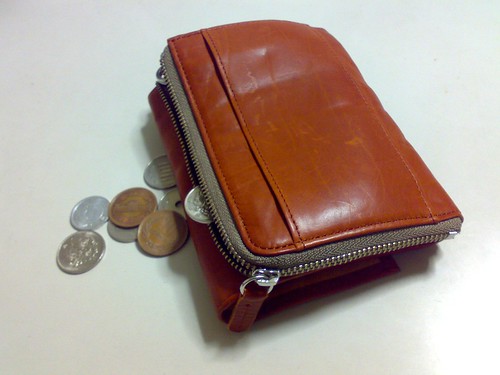
How to # 14: Deal with losing your Wallet

Call me clumsy... but I've lost my wallet 3 times in Japan... It happens... you walk around a lot..things go in and out of your bag..it's bound to happen.

However, each time I lost it, it was not only returned but had ALL THE CASH! This would happen ONLY in Japan!

Mind you that I'd carry about 30,000yen at minimum ($300USD) You live in Japan long enough, you know...that you ALWAYS need to have cash!

In either case, this is possibly my favorite attribute to why Japanese people are so great! They are so considerate. In America, the best you could hope for...in the case of a lost wallet is...is your empty wallet with all your ID's and credit cards. Not in Japan..my experience has been phenomenal. If it was at school I got it in the lost and found. College students are poor...I would not have been surprised to find my money missing.

The other occasions I lost my wallet, I was called by the cops. They found like bank card which had my cellphone number on it.(talk about service!) They called to inform me where it was, and I was able to pick it up within a couple hours of loosing it. Luckily I had some change for the train...or it would have been yabai...(no good)


So in Japan here is the protocol for receiving all your money back! This is not mentioned in textbooks or anything of that sort. So yes...japanese people are considerate...but it is also assumed that you will be grateful...and thus be osewaninatta(in debted to).


Rule of thumb
is about 20-30% of the cash that was in the wallet. Wherever your wallet was returned to, they will often leave contact information...it is up to you to contact them and give them thank you money.

  1. Lose wallet
  2. Get wallet back with all the cash
  3. Give Thanks in the form of 20-30% of wallet content
you got it? and it doesn't hurt to ask a Japanese friend for help on this matter.

So pay it forward!

Thursday, January 1, 2009

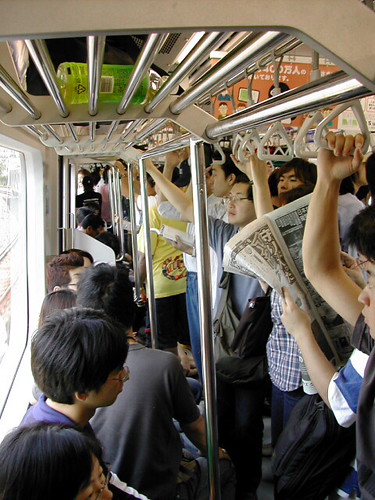
How to's #13: Understand the eerie quietness of a Tokyo Train

World's most populated city, along with the most advanced rail systems....

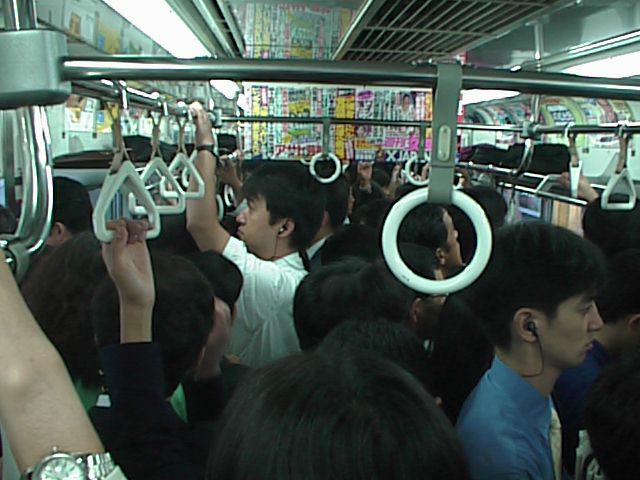
Tokyo is famous for their crowded trains. Now, combine the idea your average encounter with Asians(likely to be Chinese, and loud) except multiply that by thousands... and you will probably have an image that it is unbearably NOISY!

However, Japan is quite the opposite.

When I say eerily quiet, I do mean it. You will never have heard such intense silence in your life (Except possibly a Japanese movie theater before a film starts...I'll explain in a future post)

There is generally some minimal noise created by living beings. Such as: coughing, shuffling, breathing... In the trains though, you are left with only the sounds of: the tracks, cellphone button clicking (e-mails), PSP's, tapping of a DS, or a rude person with earphones too loud. I mean..you can honestly hear a sneeze practically in the next car over.

Now for people who live in Japan for longer periods of time, you will likely have your handy iPod or mp3 player on hand all the time. But one of these days, you will forget to charge it or you didn't plug it in correctly...and BAM! It's your morning commute and you are deprived of your music and/or podcasts for the remainder of your journey. It is at that moment, when you realize that it's quiet....scary quiet.

To make things clear, the only time that it is not quiet is during the late evenings....which are usually loaded with drunken salary men and rowdy young people who are trying to catch the last train home.

In most countries, trains will be noisy...but why....is it in Japan it is the norm to be near silent?

Well when I asked a number of my Japanese friends as well as students, the best understanding i can provide is it's historical context...


When trains were first introduced, it was a luxurious form of transportation. People would dress up, and exhibit a "proper" image. During that time, it would be rude and inappropriate to be boisterous. It is only over time, that the train system evolved to span the entirety of Japan...and grow into one of the world's most efficient systems. It may no longer be considered and a upper-class luxury anymore, but the importance of caring for others is still very much there


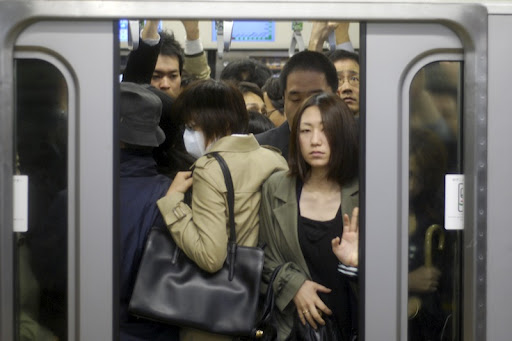
In addition, considering that you are often face-deep in somebody's armpit during a rush hour train...don't you think it's nicer that nobody is talking and yapping away letting their morning breath into the already stuffy train?

Although this is a generalized statement, Japanese people are very much the type to care for others. It is both a positive and negative attribute...But if you are to live or stay in Japan, it is one of the core understanding that is needed to understand Japanese culture...

So next time you are in the train...understand hat by being loud and inconsiderate of others, you would be infringing on another persons overall comfort and experience...Thus, it is important as foreigners that we respect and abide by this social rule of in train silence. Many foreigners feel it is stupid to abide by this rule..and that Japanese people simply care too much...but in the end...if you are in THEIR country, you should abide by THEIR rules.

So please....Don't be a BAD foreigner, and be courteous in the train. (don't eat on the train either!)

Please also read How to Survive a Rush Hour Train!


Suggestion on how to endure the silence:

  • keep you Ipod charged!
  • Podcast are your friend
  • Go to Kinokuniya to buy some books (hard to read in a rush hour train though)
  • Nintendo DS/PSP is a godsend! (i advise nintendo DS for it's more casual games...racing games and realtime games are ill advised)
  • Learn to sleep standing up (I did it...so can you)
  • Cellphone e-mails ( I use to text my friends at home..it's usually the number#@thecarrieremail.com)
  • meditate

Saturday, September 20, 2008

How to's #12: Understand the difference between Tabehodai and Viking♦♠♦

If you have lived in Japan, you are likely to be familiar with that fact that the portions are smaller. However, that does not mean you can not have a full stomach! Believe it or not, there are quite a few of these places all around! Introducing the two forms of all-you can eat in Japan!:

Tabehodai:
The best translation for "all you can eat". What this means is that you are sitting at a table and you can place as many orders as your would like. At izakayas (drinking places), this usually goes along with nomihodai, which is all you can drink! From a select menu you can call as many plates as you want.

My personal favorites are Shakey's Pizza and Guts Soul. These are two chains, that are scattered around different stations in Tokyo. Shakey's (easily located in Harajuku and Shibuya) is all you can eat pizza! There are different set you can purchase, that allow you to have more of a selection with pizza, sides, and drink! I suggest you avoid the corn and tuna one. Sounds interesting at first...but it's really not that appetizing especially when they provide the entirety of a 12 inch pizza.o_O


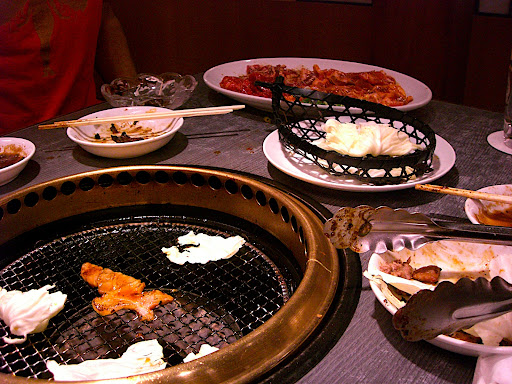
Guts Soul how I love thee... This is superiorly cheap korean BBQ. During lunch hours I believe they offer a better deal, but the evening prices are not bad either! The cheapest one is 980yen and it ranges to 1500yen. The difference is only in the selection of meet. The cheapest one is limited only to pork and some lower cut beef. The more expensive ones, give you the option to eat better cuts. Personally, it all goes down good. The ones I ate at was located at yoyogi and nakano. Try to mix in some veggies...for the sake of nutrition.^_^

OH! and for the sushi connoisseur, there is a all you can eat tsukiji tabehodai place at the kinshichyou station! It's amazing! A little bit expensive, I believe it was 2500yen a head but it was worth it! You can eat all ootoro(fatty tuna) the whole night if you so choose.

Viking:
Alright...this was pretty confusing to me, too. So Viking means buffet...Took me a while to figure that one out. I think its because there is a stereotype that Vikings ate a lot. Also, it is easier to pronounce that "buffet" for Japanese people.

The difference is that you must walk up to get your food. Viking is less tasty in my opinion. It is about the same price as tabehodai more or less. The less enjoyable features is that all the good stuff gets gobbled immediately and the remaining dregs is not very enjoyable. The temperatures of everything is not quite right, and new trays always take a while to come out>_<. I've had indian food Viking, which wasn't half bad. My worse experience was with a Thai Viking in shinjuku that caused me and my friends to have an upset stomach. o_O I will however recommend a place in Harajuku, across from the Daiso called "Dessert Paradise". There is a plethora of amazing cakes and pies to choose from! There is also a very enjoyable pasta/soup bar where you can fill up on actual sustenance before you hovel sweets into your face for 30 minutes.

With all this in mind, enjoy a night out with your friends and your full stomach! Be careful though, you are probably not accustomed to overeating and you will have negative effects. Full stomach = Happy points. Falling asleep from food coma/bloated stomach pains = -Happy points. So consume with caution!

Tuesday, August 5, 2008

How to's #11: attend University/college with English Courses


I want to begin with the fact that I went to Sophia University (上智大学 Jōchi daigaku)for a year.

Choosing a school:

With Sophia it was a good school and there is definitely some prestige to the name. In my experience, when I let Japanese people know what school I attended, it was like saying I attended Stanford or Berkeley. The FLA(faculty of the liberal arts) program is all in English. They have an decent selection of classes. Sophia is one of the top schools with the largest English program. FLA students make up about 10% of the entire Sophia school student body. It may have risen since I was there.

Other schools you may want to consider is Temple, ICU, and Waseda. and Keio University. Tokyo University, aka Todai, I believe only has specialty courses and graduate programs in english. All these schools are all in Tokyo area.

Applying and getting into these schools as a degree student is not difficult. The requirements for a foreigner are not NEARLY as strict as they are for Japanese.


Things you sho
uld know before choosing a school in Tokyo:


Tokyo people are notorious for being a little distant, so you may not be able to make as many super japanese friends. Instead, you'll meet a lot of quasi-americanized japanese that are friendly, and chill but likely speak a lot of english. I went to Tokyo with determination to make Japanese friends. I joined clubs, and tried really hard(more than I should have really...) I tried to speak completely in Japanese, be more japanese...but in the end...I didn't succeed to the extent I wanted to.(This was a consensus among many of the exchange students)

You will however be able to meet a lot of other students around the world, which was great experience for making multicultural friendships. European, Australian, Taiwanese...you name it... it's all good.^_^ I made a lot of everlasting friendships and I wouldn't trade them for the world.


More Information about My Sophia experience:

Sophia is one stop away from Shinjuku, and is in central tokyo. Extremely convenient location, but if you live out in the sticks, the commute can be rough.

Sophia has contracts with many schools, so you might consider a year long study abroad, instead of signing on as a degree student. That is what I did, My home school is University of San Francisco.

My personal opinions of the Sophia are not that great. I loved the people at th school, but I honestly wasn't that impressed. It could be possible I maybe more accustomed to American style of teaching, thus giving me a biased opinion. I like the more challenging ,"hit the ground running" kind of learning in American schools. School in Japan are by FAR much more laid back than American Universities.

In the end, 1 year was enough for me... it also didn't help that I was paying 17k+ of my schools tuition per semester. (Note: directly applying to Sophia is a much better idea, tuition is significantly cheaper) Even with the direct contract, many of my units couldn't transfer...that could be faulted on my own homeschool though.

I wasn't impressed, however, I met a few people who decided to transfer to Sophia. Their reasoning still evades me, since a Japanese Degree isn't worth diddly in the states. So not only have you squandered your "education", but you are completely ill fit to go beyond office grunt in the American world. Only those with severe ambitions can really take a lot more out of their Japanese experience outside of school. I maybe being a little critical, but I feel that many of the exchange students squander their experience more than cherish it. So I see no point in wasting your time,money, and energy if you aren't bettering yourself or the world with it. Alright..cathartic sequence...over...my apologies...

Anywho... Sophia is one of the better programs you can choose from.


My Personal Suggestions:


If it is more about learning Japanese, I would recommend a place closer to the outskirts like ICU. Where people are more friendly and likely to chat it up with you. If you are severely determined about japanese...skip the program and opt for language school. I attended Naganuma my last 4 months in Tokyo. I learned more in those 4 months thanthe 12 months before.

If you want to pursue your desired major, than your best plan is to go to an American university, and spend some time abroad. Because many of the programs don't have as wide of a selection in your major and an American school would. So be sure to find a school that is contracted, and just try to take your general requirement courses at the Japanese University.(Literature, History, English, that kinda thing) Sophia's FLA website isnt googlable...so be sure to go to http://www.fcc.sophia.ac.jp/index.html . They have a class catalog you can look at also.

Additional options: You can also do the CIEE program to Sophia, but I think it's ridiculously expensive. The benefit are the liaisons, and cultural field trips. In my 15 months in Tokyo I have met many students in CIEE, trust me when I say you would prefer to go outside of the program, and keep your freedom.

Tuesday, July 22, 2008

How To's #10: Find a Doctor


If you can't read Kanji, finding a doctor maybe difficult. However, they are absolutely everywhere.

In Japan, they have large general hospitals and small clinics. There are specialized clinics all over the place. Your don't really need to make and appointment most the time, and you can show up day of...it's quite convenient.

And to my female readers, the OBGYN is referred to as "Ladies Clinics". Also,oddly enough they automatically use curtains so you can't see the doctor...Personally, I think that just makes me more uncomfortable...(sorry guys...if that was too much information)

Your best resource is the Himawari Clinic Hotline: 03-5285-8181

This is there website

The operator will ask you what language you speak and find a proper translator. So this is a good resources to give to your non-english speaking friends,too. You tell them what you need, and which stations you are willing to travel to.

They will ask you to call back in 15 minutes. In that time they will have prepared a lovely list of doctor's that meet your criteria. Rather it be English-speaking...male...female... you name it...they'll help you find one.

They will even give you details instructions on how to get there. So if you are living in Tokyo, I highly recommend that you have this plugged into your phone.

Information worth noting:

So...in my personal opinion...Japanese doctors are not that great. I am not saying Japan is not a great country....but... my American body needs stronger and more thorough meds. Your appointment consists of you listing out your bodily discomforts...and them giving a prescription for everything you just listed...

There is no taking of temperatures...checking of heart rate...and everything else your use to with an American doctor(that is if you are American...)

I had a horribly case of bronchitis throughout the winter. It was so bad that I pulled a muscle in my side. I was in a great deal of pain, and could barely walk. All they gave me was a minor cough suppressant, and nothing for the pain. In situations like these...I wanted my Codeine and Ibuprofen!

I was also like to note that this is a nation that would not tell you if your dying. They'll tell your family but not you directly. I guess I'm too American...to appreciate that it's more of a polite gesture than them denying my right to know...

And since it is relevant, I will dabble a little bit in the Wonderful Japanese National Health Insurance. Something that as an American, a mythical concept, is a godsend as an alien in Japan. The health insurance covers up to 70% on everything! From the appointment cost to the lesser drugs they give you (it's better than nothing), it will only cost you 30%.

All foreigners in Japan have an alien registration(toryoukushou). Depending on your location, you will register with an assigned ward. At the time you do that, you can apply for your Hokkenshou, which is your national health insurance card. It is as simple as that.

Note: It is cheaper to get your wisdom teeth pulled in Japan. However, it is ill advise...since they give you weaker pain reliever 0_O

BRING YOUR OWN MEDICINE!
my list to bring from my own country includes: Ibuprofen, nyquil, dayquil, Vitamin C tablets, and Allergy medicine

Tuesday, July 8, 2008

Tokyo How To's #8: Start Teaching English(Earn far more than Money than Minimum Wage!)

This entry is not how to get into a English teaching program like JET. This is for individuals already in Japan who want to some pocket money.

There are two ways:


1. Get a work permit and work for a company

  • PRO: legitimate, back to back students, set schedule, and company provides materials
  • CON: Pay is less, hours aren't flexible, and teaching method is restricted
2. Find your own students through networking websites

  • PRO: flexible schedule, casual, over coffee or food, and much better pay
  • CON: Higher chance of encountering "creepies", commute time is costly, and inconsistent

Getting a Permit and work for a company

From what I know, you can get this only as a student. With the school, you can apply for up to 28 hours part-time. After you attain the permit, you can apply to various English teaching schools. Large companies like Gaba are very popular. However, one should only expect to see only a little over 1000yen ($10)


Finding your own student through networking websites

There are many websites that can be found for this specific purpose. I used both findateacher.net and findstudent.net. I personally liked findateacher.net more, simply because I got better responses.


There are some necessary notes that need to be taken when making a profile:
  • blood type O is best (its like horoscopes in Japan)
  • Scorpios have a bad image
  • You will get much better responses if you are a girl
  • If you are a girl, be sure to use really cute pictures of yourself
  • The first lesson should never be free(fishes out the wierdos, and covers train cost)
  • Always meet in public areas (like Cafe's, there are LOTS)
  • Students that want to meet you outside of lessons should be immediately dropped
  • Prepare a inquiry response. This was mine (in Romaji):
"Watashi wa Claudia Desu.Eigo o benkyoushitai desune. itsu ni aimashouka? doko de iideshouka? watashi no keitai meiru wa *******@ezweb.ne.jp. henji suru toki ni kono meiru tsukatte kudasai. yoroshiku -Claudia"


Pricing?

It depends on your Japanese skill level, and if you are male or female. I started off with a sample lesson of 500yen($5) and regular lesson of 2500yen($25). After a few month, I had regular students at 3500yen($35) an hour. I wasn't strict on overtime, because I was receiving a good amount of money. I also often time received meals,too. Many of my student could only have the lessons after work on weekdays.


How to teach


children:
You definitely need to get some learning material. Do not bother explaining to them grammar. Just start practicing how to say things. Try to teach 6 year old and above, and individually.(Otherwise, they go nuts)

Adults: I tailored my lesson to each student. The first lesson is getting to know them, their level, and what they would like to achieve. I emphasized conversational ability and pronunciation. A useful learning material was the free magazine Metropolis. You can get it in any Tower records. They had interesting summarized news. That would be discussion topic. Very easy, light hearted, and just all around good time. Many of them have studied English before, they just are not confident with it.


SPECIAL NOTES:

How to get rid of creepos?
It's easy! just say " I am sorry, but I have to go back to my country. Best of Luck"

It is kind of bad, but it is the best way.


You can make a lot of money, and learn quite a lot about Japanese culture. Be safe and Good luck!


Monday, June 30, 2008

How To's #7: Lose weight in Japan


It is a pretty commonly known that many people lose weight whilst in Japan. If you were raised in a fat country such America, you will spend the first 3 months or so hungry. ALL THE TIME! I shall elaborate.

Before, Due to a couple of Judo related injuries I was on crutches for a total of 13 months over a course of 2 years. What does that result in? Massive weight gain! Especially when your staple food in Lengua Super burritos....::drool:: (by the way; Lengua is beef tongue). My heaviest point was 162lbs, and I am 5'6". I was noticeably fatter, since my body likes to store all of it in my face. (good bye jawline)

Now that I have lived in Japan for approximately 15 months, I have lost approximately 24lbs total. This is not counting the 10 lbs I lost before I came to Japan. I set a goal for myself, and had a lifestyle change. For those looking for a quick cheat to lose weight, I'm sorry you won't find the answer here. When it comes right down to it, its healthy eating, exercise, and building good habits. The following is small changes I have made, that can be implemented to those not in Japan. They are in order of what I believe really was most effective.

LOSING WEIGHT Factors!:

  1. Walking: believe it or not, it makes a huge difference! In Japan, you walk EVERYWHERE. In order to do anything you must walk. My legs were sore for the first month. Ever heard of "10,000 steps a day"? Use a pedometer to keep track. It's great because it feels like a video game. You want to get a higher score so you opt to take the stairs. In fact, small options like that burn a good amount of calories compared to walking. In Japan, when I felt my score was low, I wandered in a nearby shopping street for about 15 minutes. 15 minutes there and than 15 minutes back equals about a third of how much I need for the day. After a while I didn't need it anymore.
  2. Portion Size: It is noticeably different in Japan. I would say about 20% to 40% less, depending on the type of meal. Everyone jokes about it, but after 15 months...I realize that how much I overate in the past. Like I said before, I was hungry ALL THE TIME for the first 3 months. What changed?...my stomach size. It shrank by half within 8 months. My unit of measurement was a burrito. I use to be able to finish an enormous 11 inch super burrito. Now, if I attempt to eat half, I am on the verge of death. It doesn't matter what you eat as long as you control your portions!
  3. Calorie Counting: It depends on each person, but we all burn about 1600 to 2200 calories per day. You can go here to find yours. There are forms of dieting where you keep a log of your daily intake. It is very effective I hear, but I was too lazy. However, I did keep a mental log. Japan makes calorie counting so much easier! Many of the restaurants let you know the amount of calories, as well as grams of fat, in your meal. You'd be surprised to find that some salads have almost the same calories as sandwiches. In either case, keep concisous and make healthier choices.

There are many other contributers, such as: green tea, less greasy methods of cooking, and no fridge or cupboard to raid. When comes right down it is a LIFESTYLE CHANGE. I just used my stay in Japan to push off of. I plan to continue my healthy habits upon my return, and maintain the my weight. I am now at my normal weight, absent of injuries and crutches.


Also, I have decided to only eat burritos once a month. And opt for the "sourcream, guacaomole, and excess everything" -less options.(this is just a personal choice, burritos are my weakness)


MAKE HEALTHIER CHOICES AND EXERCISE!


Good luck to all
. Additionally, I will post before and after photos of my weightloss journey.

Thursday, June 26, 2008

Guitar Hero...Eat You Heart Out!

The anticipated Guitar hero on tour is seems pretty impressive, but come July 28th, Japan is selling their mega awesome rhythm/ synthesizer/ karaoke/ interactive rock band game.


Introducing...

Daigasso! Band Brothers DX

It’s bigger and better than the first Daigasso in 2004!


The video is in Japanese, but here is a run down of it’s AWESOMENESS!


The first feature starts with implementing the mic. You sing into your DS mic, whilst the lyrics scroll on the bottom. It counts your accuracy, and you get ranking and scores. However, for the Japanese gamers, I guess playing this part of the game in train is out of the question.


Second, we have the normal rhythm based game using the D-pad and the ‘a’ ‘b’ buttons. Once the song is chosen, you can pick from various instruments. The examples given in the commercial are the: Flute, Guitar, Percussions, Shamisen, and Electric Guitar. Of course, it would not be complete, if you can’t stroke the strings of your digital guitar.


Third feature is the vast collection of songs. Built into the game you can choose anything from classics to J-pop. What the Japanese consider “classics”?...I have no idea. However, you can use your wifi connection and download and store up to 100 songs of your liking!


Fourth is that synthesizer! You can use the digital piano to create notes on your music sheet, or you can move them around yourself. This is midi-based composing, so you can choose the instruments and create your own songs.


Fourth is my personal favorite, you have many ways of interacting with your friends! All the music that you have, rather downloaded or personally composed can be shared with friends. And for the rhythm game, you can link up to 8 people and have your own digital rock out! Best part, is you only need one copy of the game.


Lastly, you can connect via Nintendo wifi to your wii and have all the music played on your TV Stereo,instead of you dinky DS Speakers. House party via DS? Uh…yes!


If we are to compare, Guitar hero has completely different game play and an enormous cult following. Moreover, this game is at the moment only playable by those who understand Japanese. If and when will be introduced in the states? Unknown.


But all in all, you have to admit….Daigasso! Band Brothers DX is pretty awesome!

Wednesday, June 18, 2008

How To's #6: Survive a Rush Hour Train(((((>_<))))!!!

Tokyo is THE most populated city on the Planet. With a population over 12 million people, they have designed one of the world's most efficient train systems. Thus, creating a society where commuting via train is better than by car. So what happens when everybody travels at the same time to school and work?

ABSOLUTE HELL!

After experiencing it first hand, you feel a closer understanding as to why the suicide rate is three times higher in Japan than in America. You truly want to kill yourself.
Some would describe it as sardines in a can. However, I believe it's much closer to trying to close your luggage, after you've over packed. You have to sit on it and have a friend hold the edges together as you move the zipper inch by inch...and you are the travel size tooth paste.

Yes, I think that would be a much more accurate description. Especially since there are platform workers who's only job is to push you into the train, so that the doors can shut.

Being inside of a rush hour Tokyo train can truly be dangerous. It is not unheard of to dislocate something, or break a rib(or two).

If you are traveling at the hours of 7:00-9:00, both AM and PM, it is unavoidable. The last train is as bad as rush hour, if not worse. People are pissed drunk and reek of various foul odors.

Thus I provide you with tips on how to survive...

SCENARIO 1: You are first in the train

Highlighted are the desired positions. You want the corner between the door and seats, and the center isle. You are less likely to get squished...these are prime locations. Avoid walls, if the train makes and abrupt stop or turn, you will be in a serious amount of pain.

Note: If you are not getting of at a big station or transfer platform, be ready to push for you life. If you are commuting, try to memorize, which side the doors open on to help you strategically move to these locations.

SCENARIO 2:You are the last to get in.

If you are last in, getting a strategic position is not possible(you are screwed). The train will be packed...and I mean...scary packed. But remember... "IF THERE IS NO ROOM, MAKE ROOM". Only on occasion will you encounter a situation where it is physically impossible to get in.

Since there are no strategic points, I will provide tips.

Go in Backwards--------Watch your Foot----------Use you arm as leverage

NECESSARY NOTES:

Diagram 1-----------------------Diagram 2

Diagram 1:
You will encounter people resisting your efforts to get into the train. SCREW THEM! They are being assholes and they should know better. Tuck in our elbows and Push HARDER!

Diagram 2:
For those individual with a low tolerance for pain, AVOID OPEN TOE SHOES! Opt for steel toe combat boots.


*be wary of the enormous gaps between the train and the platform*
(people fall in between all the time!)

Saikyou, Chuo and Yamanote line are notoriously the worst.


Saturday, June 14, 2008

Tokyo How To's #4: Japanese Toilets (Modern and Squatters)


The Infamous Japanese Toilet....

Daily stops to do your 'business' has never been more complicated. There are a few variations; some familiar and some unfamiliar.


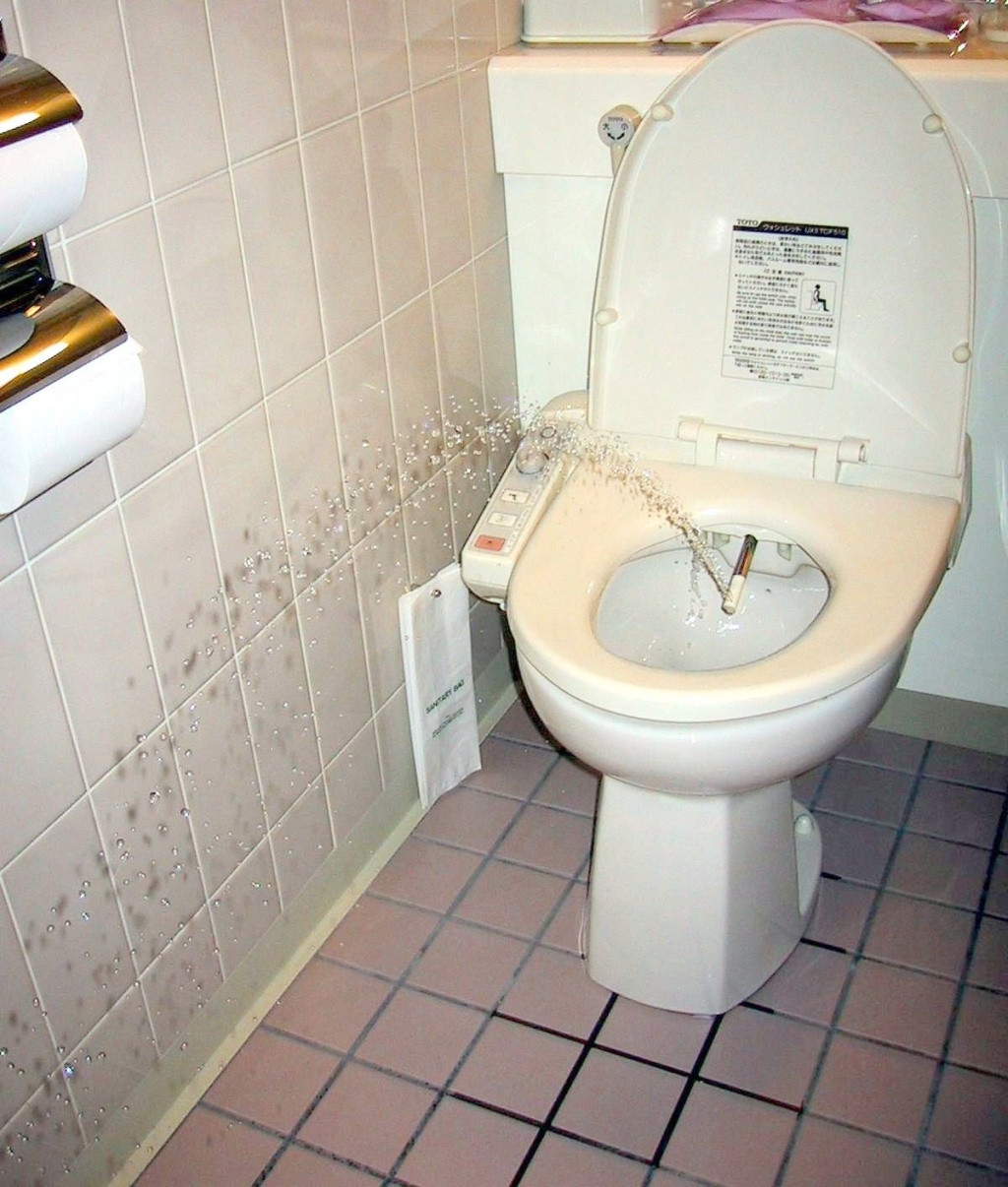
We start with the butt spraying water jet, which is number one for strange experiences. You can control the heat, and strength of the steam to suit your preference. Some also have a hot air button, to dry off your bum after thorough wash.

The normal,one directional silver knob we are use to, puts the user in a predicament when encountering a Japaneses flusher;which can be absurdly confusing.


To begin, there is a 大(big) and 小(small) flush. Further explanations about appropriate usage, in unnecessary I think. Usually the flusher is in an obvious position. However, sometimes it is a panel on the wall with a variety of buttons, differing in size and color. If you can't read, it is usually safe to just push the biggest button(no guarantees). I've personally been confused on a number of occasions. I don't know if you ever truly get use to it.

The Sensor Flusher is blackish red box flesh against the wall. You have to cover your hand over the sensor in order to flush.

The Dreaded SQUATTER!


It takes getting use to, but it's not that bad. At least, you don't have to worry about having a clean toilet seat...

So the appropriate way to use it is to face the flusher, in the direction of the dome...i guess it's to prevent splatter...? *shivers*


It's confusing because in other part of Asia with squatters, it's the opposite.


Don't worry, unless you are horribly drunk, you will not get anything on your shoes or pants...(again, no guarantees) Think about it this way...."What did people do before inventing sitting toilets?". It works, don't worry.


Additional Notes:


When visiting a Japanese person's home, and looking for the bathroom, be sure to say "TOIRE"(phonetically: Toy-reh) instead. You will avoid a lot of confusion.


Upon entering, you will soon realize why they call it a water closet, emphasis on CLOSET. Like all sanitary people, we wash our hands after we're done. The Japanese have created a wonderful way of conserving water, by having the faucet above the tank... so please use that...and not the kitchen sink...


My personal favorite oddity is the Otohime... translated into "sounds princess". It is as ridiculous as it sounds. It is a used to mask urinating noises, by having a repeated flushing sound go off. It's more widely used in toilets in Tokyo than in other parts of Japan. Additionally, many of the Sensor Flusher have this feature. Simply wave your hand across the sensor and it will trigger the "sound princess".

This concludes the Japanese toilet info blog.


Tokyo How To's #3: Getting a Cellphone (J-Phone!)


Everybody knows the Japan is the nation of cellphones. The coolest and latest. You can watch TV, surf the web, send e-mails and stalk your friends. Every non-Japanese person yearns for these gorgeous phones. Believe it or not, it is NOT THAT EASY!

Short trips: Pick up a pre-paid cellphone at the Airport. IT IS VERY DIFFICULT TO FIND A PREPAID OUTSIDE OF THE AIRPORT.

Longer stays:

Let us start by stating that all cellphone companies require a 1 year contract at minimum. If you are staying less, you are subject to cancellation costs. The longer you keep it the less it will cost to cancel.

Many of these phones will NOT work abroad, unless unlocked(which is a pain in the butt). Many of the nifty features will not work also. So you will be left with a extremely pretty phone. I emphasize that it is JUST a phone, outside of the states. So make consider that when buying a phone.

Important info worth knowing:

You will also be unpleasantly surprised that Cellphone minutes are outrageously expensive compared to the states. The plans also have absurdly few minutes. So get use to talking like an auctioneer.

They have SMS, it is called c-mail. However, very few people use it. E-mail is the most popular form of communication. DO BUY a e-mail plan. Keep in mind that because of bad communication, they will tell you that its 1000yen for 10,000 e-mails. That is a lie. It is up too 10,000,and your e-mail fee can be as high as 3500. It only starts at 1000yen...

Also, you should also know that minutes are only incurred onto the caller. It cost you nothing to receive calls. I also believe that messages consume you minutes only for the length of the message, so checking it over and and over again makes no difference.

-------------------------------------------------------------------------------------------------
Lets do a brief overview of the main Japanese carriers:

AU

This was my carrier. They have one of the better student discount plans, more minutes for a about 40% less.

*Free train schedule checker, weather, and news (EZweb)
http://www.au.kddi.com


Softbank

They have, in my opinion, a better phone selection. Will be the new carriers of Iphones. They also carry more phones that can be used over seas(If unlocked)

* Unlimited calls with other Softbank users, good if you have friends with Softbank.
http://mb.softbank.jp


Docomo

I don't know too much information about the, beside them being one of the oldest carriers in Japan. They carry many of the the typical looking J-phones.

* many different types of discounts http://www.nttdocomo.co.jp


Willcom

They are one of the newer carriers within the last year. There phone selection is mostly that of the PDA Smartphone and portable internet type devices. Don't know too much


*best for internet at your fingertips
*many Flat rate plans.

http://www.willcom-inc.com


EM Mobile

The newest carrier. Not to much information. They have a VERY small selection, and carry mostly portable internet type devices. They carry the best models in their class. Sells Internet PC-cards.


http://www.emobile.jp